Revvox Dial · Coding round · Early access
Run a coding round that works like the job.
Candidates who pass Vira's phone screen get a link to a timed task in a small codebase. They fix or extend it in the browser and run the tests in a sandbox. You see every run, plus hidden tests on what they submit.
The problem
A puzzle from a list tells you who practised puzzles. A take-home tells you who had a free weekend. Neither shows how someone works in a real codebase. This round does.
- Real code, not puzzlesA small multi-file TypeScript service with its own tests.
- Every run on recordNot just the final answer: each time they pressed Run tests.
- Your team decidesThe round shows what they did. Who moves on is your call.
Inside the round
Real code for the candidate.
Real evidence for your team.
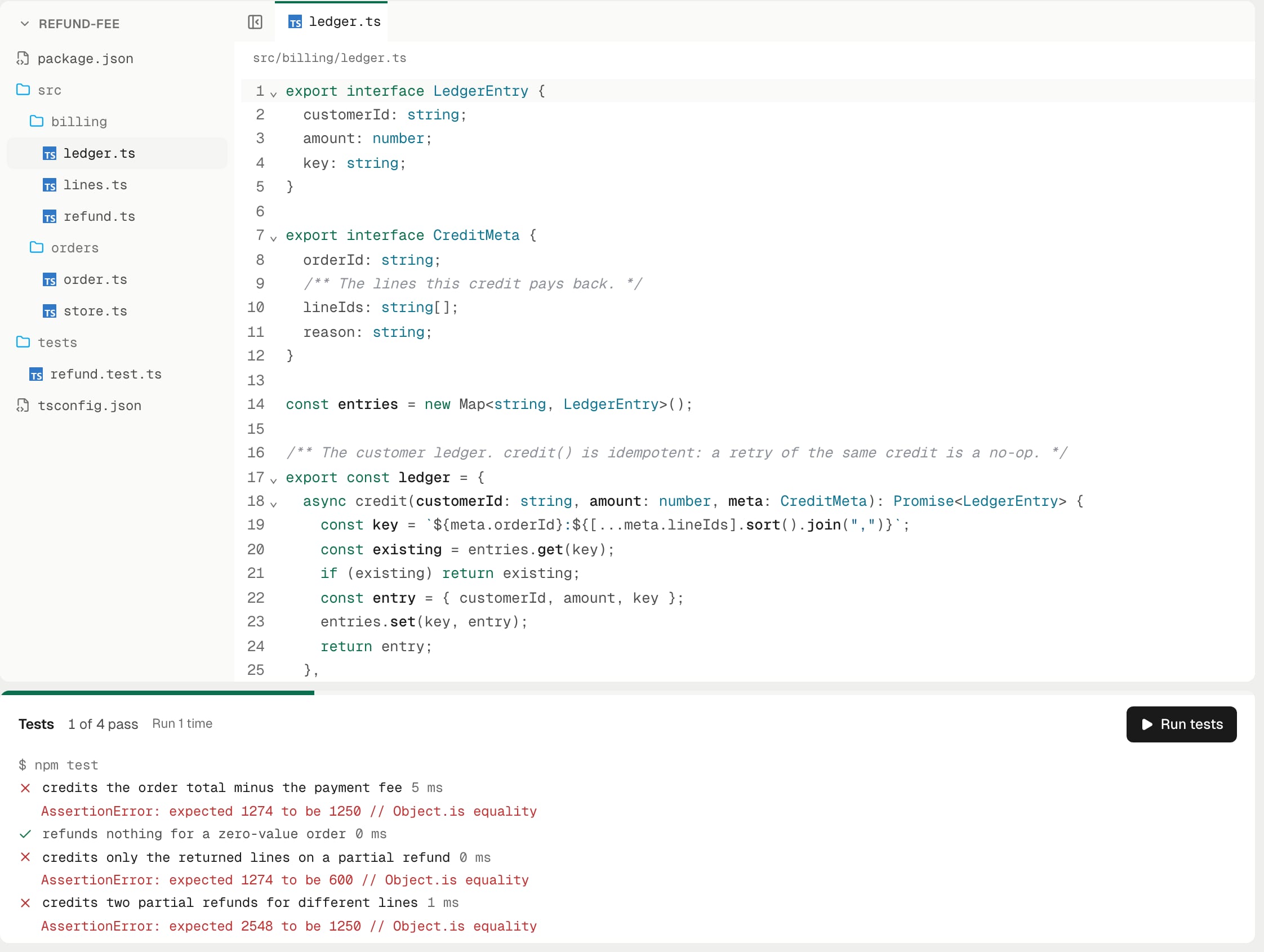
A real editor on a real codebase
The task, the project's files, the editor and the tests. Saved as they go; the time left is always in view.
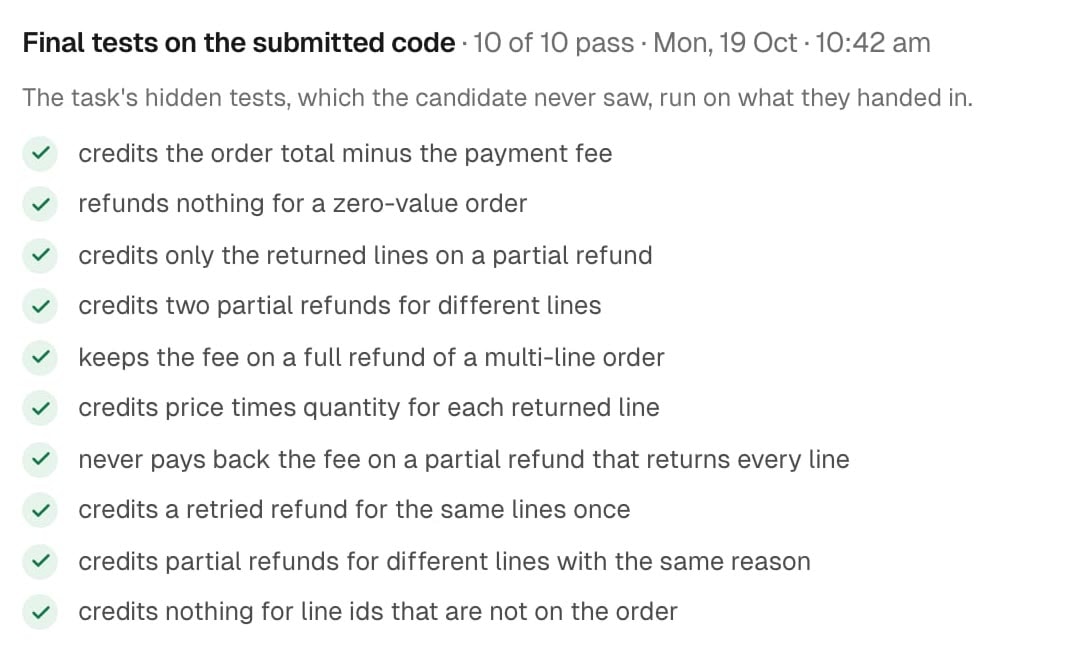
Every run, and the tests they never saw
Hidden tests on the submitted code, then each of their own runs with timings and failures, in the same Dial workspace.
Where it fits
From applicant to shortlist.
The coding round is step two of four.
The coding round sits between Vira's phone screen and the final interview. Phone screening is live in Dial today.
- 01
Vira screens everyone
Every applicant gets a phone screen in their language and a result with the reason: Pass, Check or Not fit. Live today.
- 02
A coding round for tech roles
Passes get a link to a timed task in real code. They run the tests in a sandbox and submit; you see every run. Early access.
- 03
An expert takes the final round
A vetted senior engineer from outside your team interviews your shortlist live and writes a scorecard. Early access.
- 04
Your team decides
You get the phone-screen report, the test results and the scorecard. Who gets an offer is always your call.
For the candidate
One link, one sitting.
Nothing to install.
- 01
Open the link
No account and nothing to install. The page shows the company, the role, the tasks and the time allowed, and asks for consent before anything is recorded.
- 02
Start the clock
The timer is kept on our server, so a reload costs nothing. Close the tab and open the link again to carry on where they left off.
- 03
Run the tests
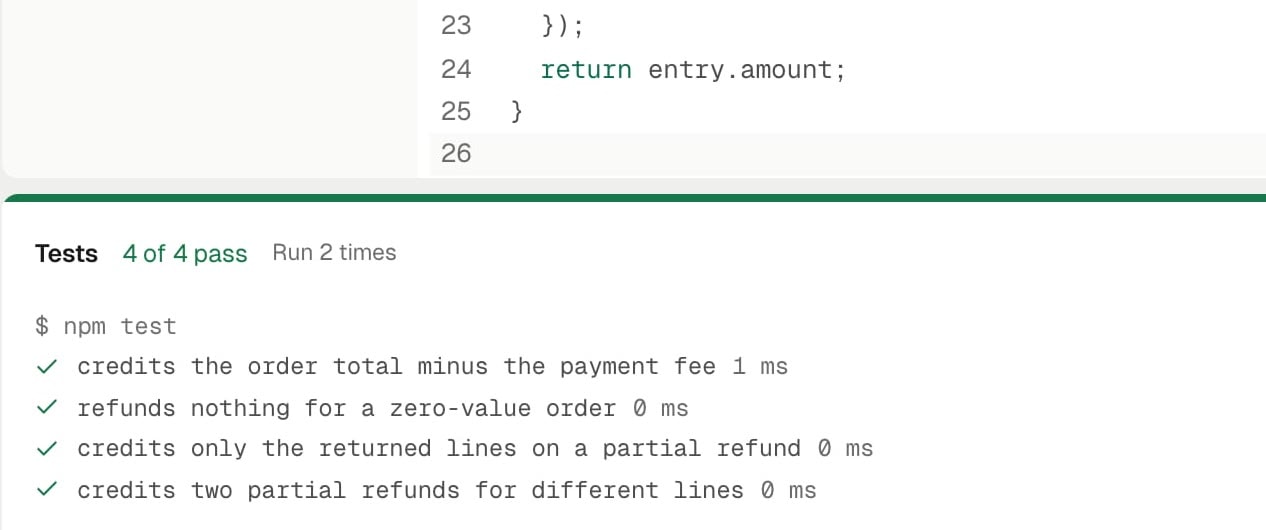
As often as they like. The tests run in an isolated sandbox and show which pass, and why the rest fail.
- 04
Submit
When they are done, or automatically at the time limit from their last saved work. They see no score; your team sees the results.
For your team
You set the round.
You make the call.
One or two tasks per role
Pick from the task library, up to 90 minutes in all. The round belongs to the role, next to its phone screen.
Sent by hand or after a Pass
Send the round to the candidates you choose, or let it go out automatically when Vira marks someone a Pass.
Links you stay in charge of
Each invite is a private link that closes on the date you set. Extend it once by 48 hours, or cancel it before they start.
Every run on record
Each time the candidate presses Run tests is kept: when, how many passed, how long it took, and the failures.
Hidden tests on the final code
When they submit, a second set of tests they never saw runs on what they handed in. That is the result you judge.
Who is where
Invited, opened, started, submitted, expired or a no-show, for every candidate in every role.
The tasks
Work from a codebase,
not a puzzle from a list.
Real code, not puzzles
Each task is a small multi-file TypeScript service with its own tests, the kind of code people work in every day.
Fix a bug or build on it
Today's library: a billing service whose refunds pay back too much (45 minutes, fix a bug) and an orders API that needs paging (60 minutes, extend a feature).
A different version per candidate
Each candidate gets their own variant, with a different planted bug and different numbers, so an answer passed around does not fit the next person's task.
Where it stands
What works today,
and what is still being built.
If what ships changes, this page will say so.
Browser editor and testsEarly access
File tree, tabs, TypeScript highlighting, and Run tests in an isolated sandbox.
Hidden tests and resultsEarly access
The final run on the submitted code, and every run before it, for your team.
Invites by WhatsApp and emailNext
Today you share the candidate's link yourself. Sending it for you is next.
More stacksNext
Tasks run on Node.js in TypeScript today. Other languages come after.
Vira in the roomIn development
Vira talking the candidate through the task by voice. The room says plainly that she does not join yet.
A marked reportIn development
Skills scored against a written rubric, each mark linked to what the candidate did.
Questions
The coding round:
what hiring teams ask.
Is the coding round available now?
Which languages can candidates use?
Do candidates need an account?
What if a candidate's tab closes or the connection drops?
Does the candidate see their result?
Does AI decide who passes?
Ready to turn your shortlist into the right hire?
Early access opens to a few companies at a time. A founder reads every request.